
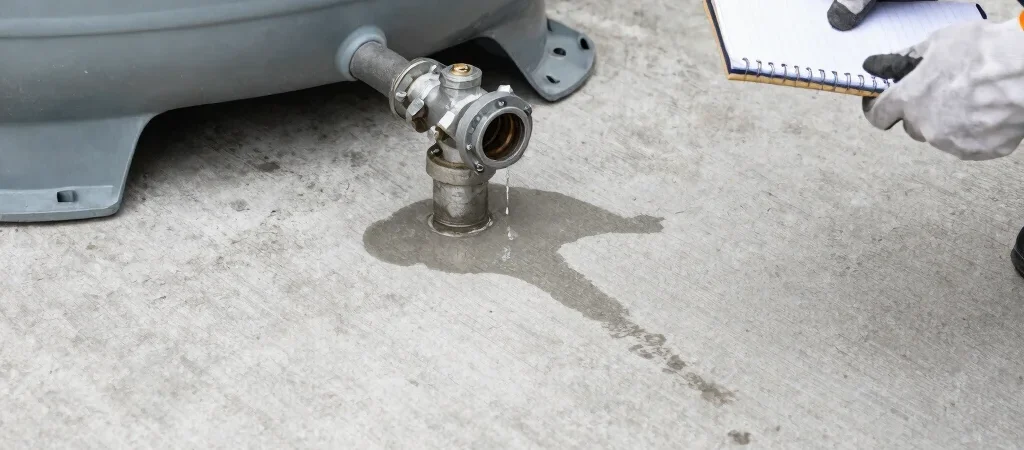
You find a damp patch beneath a tank and the source is not obvious. Water can travel along a pipe or support before it reaches the ground, so the wettest spot may not be directly below the leak. A careful visual check is more useful than guessing and tightening whatever is closest.
Follow The Visible Signs
Start at the tank and look over the outside surface, seams, fittings, and connected pipes for fresh wetness, drips, or staining. Check nearby floors, walls, and supports for a trail that may show the direction water has traveled. Avoid opening or entering the tank as part of a routine leak check.
Look for changes rather than treating every mark as a current leak. Old staining may remain after an earlier issue, while a new damp area or recurring drip deserves attention. If it is safe to do so, take a clear photo and note whether the area becomes wet again.
Check Fittings Without Forcing
Visible joints, valves, and pipe connections are useful places to inspect because a leak may show up around them. Look for a drip at the connection, a loose-looking component, or water collecting below it. Do not force a valve, apply sealant, or tighten a fitting without knowing whether the part and tank are designed for that repair.
A crack in the tank body, a leak near a structural support, or water that continues to appear needs a more careful assessment. If the tank is elevated or access is difficult, do not climb onto an unsafe structure to investigate. Share your notes and photos with a qualified service professional.
Record And Escalate Clearly
Write down where the water appeared, when you noticed it, and whether it returned after the area was observed. Include whether the visible tank, fittings, or surrounding surface also looked wet. These details help distinguish a one-time spill from a recurring condition.
If water is actively escaping or the tank or its support looks damaged, follow the site’s procedures and contact the responsible maintenance professional promptly. Avoid relying on a temporary patch as proof that the cause is resolved. The best first response is a clear record of the symptom and a safe handoff to someone equipped to assess it.