
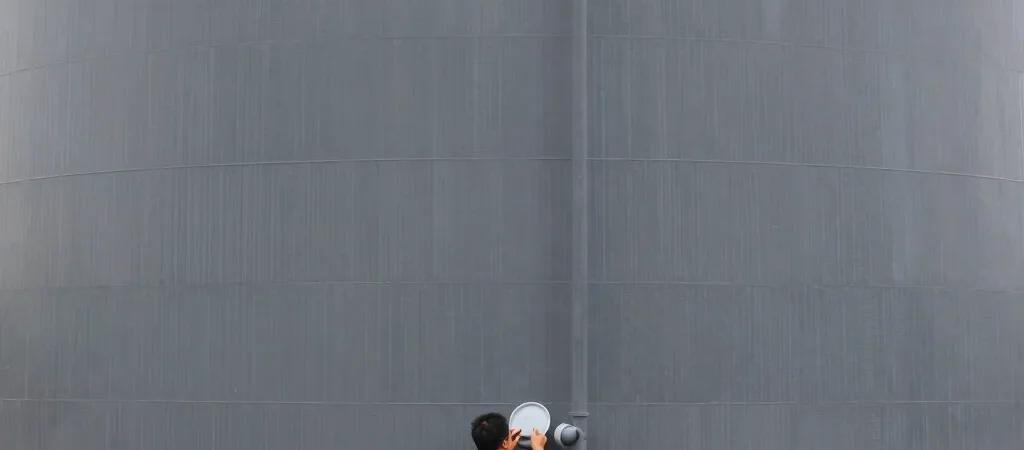
A tank can look fine from across the yard while a loose fitting or shifted cover goes unnoticed. A short, repeatable inspection makes it easier to catch changes early and record what you found. Start with the tank and conditions you actually have, then use the same route each time.
Begin With The Surroundings
Look at the ground, platform, or utility area around the tank before touching anything. Note new damp patches, pooling water, erosion, debris, or objects pressing against the tank. For an underground tank, check the visible access area and nearby surface for changes such as sinking or cracking.
For an overhead tank, look at the support structure from a safe, accessible position. Notice visible movement, corrosion, or damage, and avoid climbing onto an unstable platform to get a closer view. If something appears unsafe, keep clear and arrange an appropriate inspection.
Check The Cover And Connections
Confirm that the cover sits in place and has no obvious cracks, warping, or gaps. Check that access points and visible vents are not blocked or damaged, following the tank maker’s guidance for that model. A cover should fit its opening; a loose cover or improvised weight is not a reliable substitute.
Inspect visible pipes, valves, and fittings for drips, wetness, or signs that a connection has shifted. Do not force a valve or tighten a fitting if you are unsure how it works. Record the location and what you observed so the right person can assess it.
Keep A Simple Record
Write down the date, the areas checked, and any change from the previous inspection. A photo taken from the same safe viewpoint can help compare a damp patch or fitting over time. Include maintenance or service visits in the same log.
Use the notes to decide what needs follow-up rather than relying on memory. If you find active leakage, structural damage, or a condition you cannot assess safely, contact a qualified maintenance professional. The practical habit is simple: inspect, record, and follow up on specific changes.